- Jul 01, 2026
- Announcements
- 792
Share this post on:
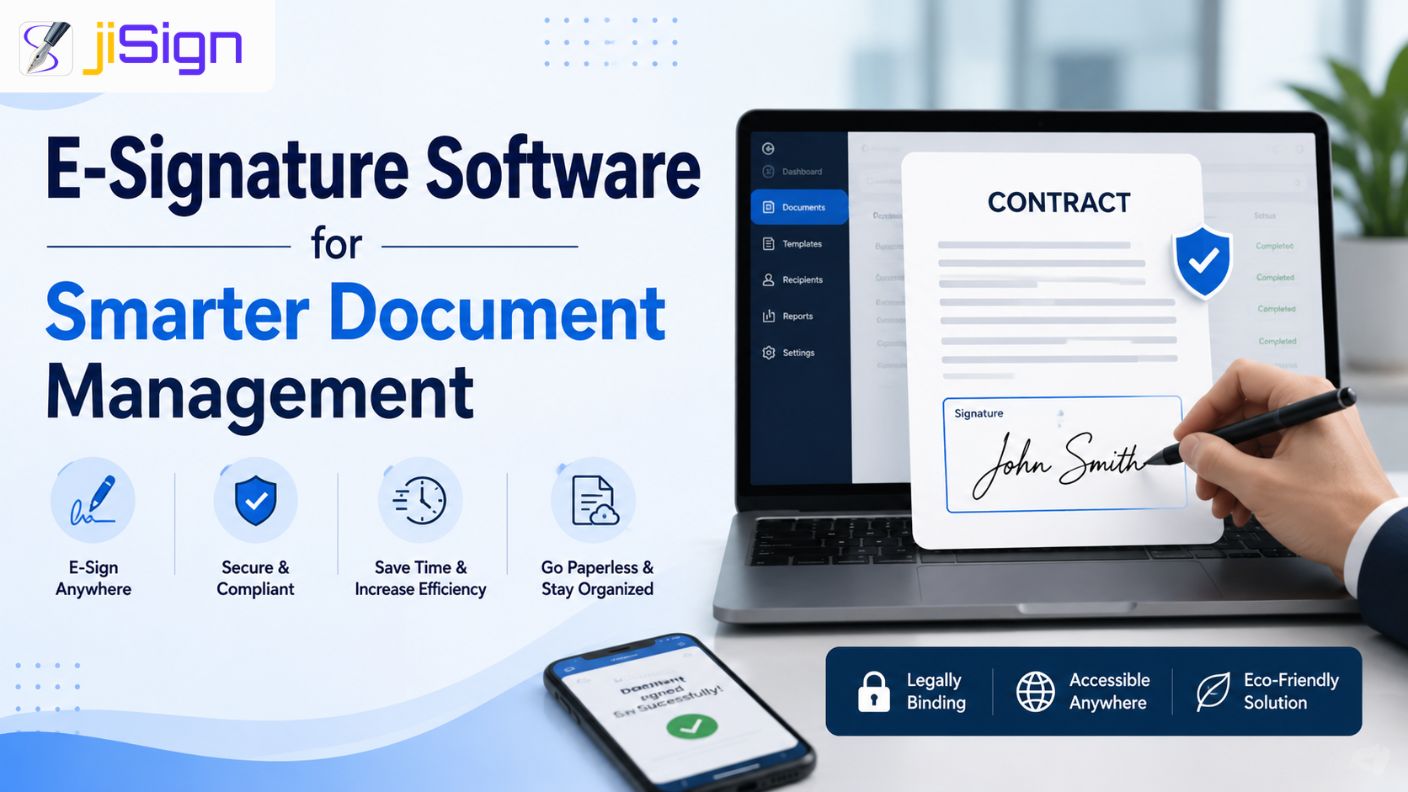
In today’s fast-paced digital world, businesses are rapidly moving toward paperless operations. One of the most significant innovations driving this transformation is e-signature software. It has revolutionized how organizations handle contracts, approvals, and document workflows. From startups to large enterprises, e-signatures are now an essential part of digital document management systems.
This blog explores how e-signature software is transforming the way businesses manage documents, improve efficiency, enhance security, and support remote work environments.
Key Takeaways
- E-signature software speeds up document workflows, allowing businesses to get approvals and contracts signed in minutes instead of days.
- It helps organizations reduce costs and eliminate paper-based processes, including printing, courier, and storage expenses.
- E-signatures provide strong security and legal validity, with encryption, authentication, and compliance with global laws like ESIGN and eIDAS.
- The software supports remote and hybrid work models, enabling users to sign documents from anywhere at any time.
- It improves transparency and workflow automation, allowing real-time tracking of documents and reducing manual effort in business processes.
What is E-Signature Software?
E-signature software is a digital tool that allows individuals and organizations to sign documents electronically without the need for physical paper or in-person signing. It replaces traditional handwritten signatures with secure digital authentication methods.
Instead of printing, signing, scanning, and emailing documents, users can simply upload a file, add a digital signature, and send it within seconds. Modern e-signature software ensures that the signed documents are legally valid, secure, and tamper-proof. The Shift from Paper-Based to Digital Document Management
Traditional document management systems relied heavily on paper-based workflows. This approach had several challenges:
- Time-consuming approval processes
- High printing and storage costs
- Risk of document loss or damage
- Delays in communication
- Difficulty in tracking document status
With the rise of digital transformation, businesses are shifting toward electronic document management systems powered by e-signature solutions. This shift is not just about convenience—it is about improving productivity and operational efficiency.
How E-Signature Software is Transforming Document Management
1. Faster Approval Processes
One of the biggest advantages of e-signature software is speed. Documents that once took days or weeks to get signed can now be completed in minutes.
For example:
- Contracts can be signed instantly
- HR onboarding documents can be approved remotely
- Vendor agreements can be finalized without delays
- This speed helps businesses operate more efficiently and close deals faster.
2. Eliminating Paperwork and Reducing Costs
Paper-based document management involves several costs:
- Printing documents
- Courier and postage charges
- Physical storage space
- Administrative handling
E-signature software eliminates most of these expenses. By digitizing the entire process, businesses save money while also contributing to environmental sustainability.
3. Improved Security and Authentication
Security is one of the most important aspects of document management. E-signature software provides advanced security features such as:
- Encryption of documents
- Multi-factor authentication
- Audit trails showing who signed and when
- Tamper detection mechanisms
- These features ensure that documents cannot be altered after signing, making the process highly secure and trustworthy.
4. Better Remote Work Support
- With remote and hybrid work becoming the new normal, businesses need tools that support collaboration from anywhere. E-signature software enables employees, clients, and partners to sign documents from any location.
- This is especially useful for:
- International business agreements
- Remote employee onboarding
- Freelance and contract-based work
- It removes geographical barriers and ensures smooth workflow continuity.
5. Enhanced Workflow Automation
Modern e-signature tools are often integrated with workflow automation systems. This allows businesses to:
- Automatically send documents for approval
- Set reminders for pending signatures
- Track document status in real time
- Store signed documents in cloud storage
- Automation reduces manual intervention and improves accuracy.
6. Legal Validity and Compliance
- Many businesses worry about the legal acceptance of digital signatures. However, e-signature software is legally recognized in most countries under laws such as:
- ESIGN Act (USA)
- eIDAS Regulation (Europe)
- IT Act (India)
These laws ensure that digitally signed documents are legally binding and enforceable.
7. Real-Time Tracking and Transparency
With traditional methods, it is difficult to track where a document is in the approval process. E-signature software solves this problem by providing real-time updates.Users can see:
- Who has viewed the document
- Who has signed it
- Who still needs to sign
This transparency improves accountability and reduces delays.
8. Eco-Friendly Business Operations
Going paperless is not just about efficiency—it is also about sustainability. By reducing paper usage, businesses can significantly lower their environmental impact.
E-signature software helps:
- Reduce paper waste
- Decrease carbon footprint
- Support green business initiatives
Many companies now use digital signing as part of their ESG (Environmental, Social, Governance) goals.
Industries Benefiting from E-Signature Software
E-signature technology is widely used across various industries, including:
1. Healthcare
- Patient consent forms
- Medical records approvals
2. Banking and Finance
- Loan agreements
- Account opening forms
3. Real Estate
- Property sale agreements
- Rental contracts
4. Human Resources
- Employment contracts
- Offer letters and onboarding documents
5. Legal Services
- Client agreements
- Court documents
Challenges in Traditional Document Management
Before e-signature software became popular, businesses faced several challenges:
- Slow manual approvals
- Misplaced or lost documents
- High dependency on physical presence
- Lack of transparency
- Inefficient storage systems
- E-signature solutions directly address these problems by digitizing the entire process.
Key Features of Modern E-Signature Software
- Some important features include:
- User-friendly interface
- Cloud storage integration
- Mobile compatibility
- Template creation
- Bulk sending of documents
- Advanced authentication methods
- These features make digital signing easy for both technical and non-technical users.
Future of E-Signature Software
- The future of e-signature technology looks promising. With advancements in AI ,blockchain, and automation, we can expect:
- Even stronger security features
- Smarter contract analysis using AI
- Blockchain-based verification
- Fully automated document lifecycle management
- E-signature software will continue to play a major role in digital transformation strategies across industries.
Conclusion
jiSign has completely transformed digital document management. It has replaced slow, paper-based processes with fast, secure, and efficient digital workflows. Businesses now benefit from reduced costs, improved security, better compliance, and enhanced productivity.
As organizations continue to embrace digital transformation, e-signature solutions will remain a core part of modern business operations. They are not just a convenience—they are a necessity for the future of work.
FAQ'S
1.What is e-signature software?
E-signature software is a digital tool that allows users to sign documents electronically without printing, scanning, or physically signing papers. It helps businesses manage documents faster and more efficiently.
2. Is an e-signature legally valid?
Yes, e-signatures are legally valid in most countries, including under laws like the ESIGN Act (USA), eIDAS (Europe), and India’s IT Act, making them acceptable for business and legal use.
3. How does e-signature software work?
It works by allowing users to upload documents, add digital signatures, and send them for approval. The software tracks signatures and securely stores the signed documents.
4. Is e-signature software secure?
Yes, it is highly secure. It uses encryption, authentication methods, and audit trails to ensure documents cannot be tampered with after signing.
5. Can e-signature software be used remotely?
Absolutely. Users can sign and manage documents from anywhere using laptops, tablets, or smartphones, making it ideal for remote and hybrid work environments.